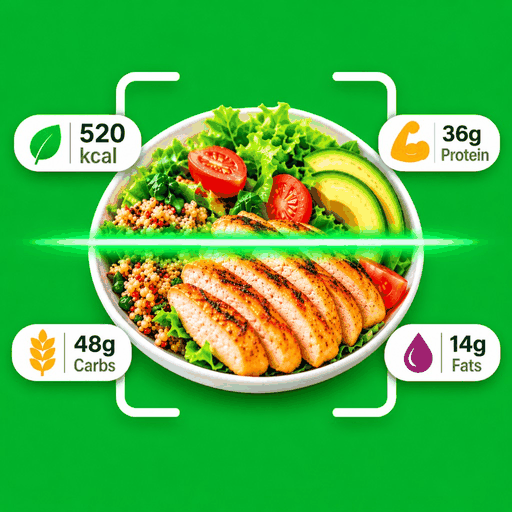
Macronutrients
Macro calculator
A macro calculator splits calories into protein, fat, and carbohydrate. Protein is set near 0.8 g per pound, inside 0.7–1 g per pound. Fat is about 20–30% of calories. Carbohydrate fills the rest.
Maintenance calories 2,200 kcal
- Protein 123 g, fat 61 g, carbohydrate 289 g.
- Protein is set near 0.8 g per pound, inside the 0.7–1 g per pound range. Fat is about 25% of calories.
Estimates for a food log, not medical advice. The floor is 1,200 kcal for this selection.
Equations and activity factors
Mifflin-St Jeor, the default here: for men, 10 × kg + 6.25 × cm − 5 × age + 5. For women, 10 × kg + 6.25 × cm − 5 × age − 161.
Total daily energy expenditure is basal metabolic rate × the activity factor. About 60–70% of that day is basal metabolic rate, about 20–30% is activity, and the thermic effect of food is about 10%. The multiplier already includes those shares.
| Activity level | Factor |
|---|---|
| Sedentary | 1.2 |
| Lightly active | 1.375 |
| Moderately active | 1.55 |
| Very active | 1.725 |
| Extra active | 1.9 |
Macro calculator for weight loss
The calorie side is a deficit of about 300–500 kcal under maintenance. A macro calculator for fat loss uses that lower calorie number, not a different protein rule. A macronutrient calculator for weight loss on this page follows the same split.
Macro calculator for muscle gain
For muscle gain, start from a 250–500 kcal surplus and keep the same protein range. This is the macro calculator for muscle gain on this page, not a training plan.
Questions
Can you build muscle on a calorie deficit?
It is possible for some people, especially with a smaller deficit and protein around 0.7–1 g per pound. A calorie surplus is the usual setting for a macro calculator for muscle gain. This is general information, not a training plan.